Interview with a published author: Emma V.
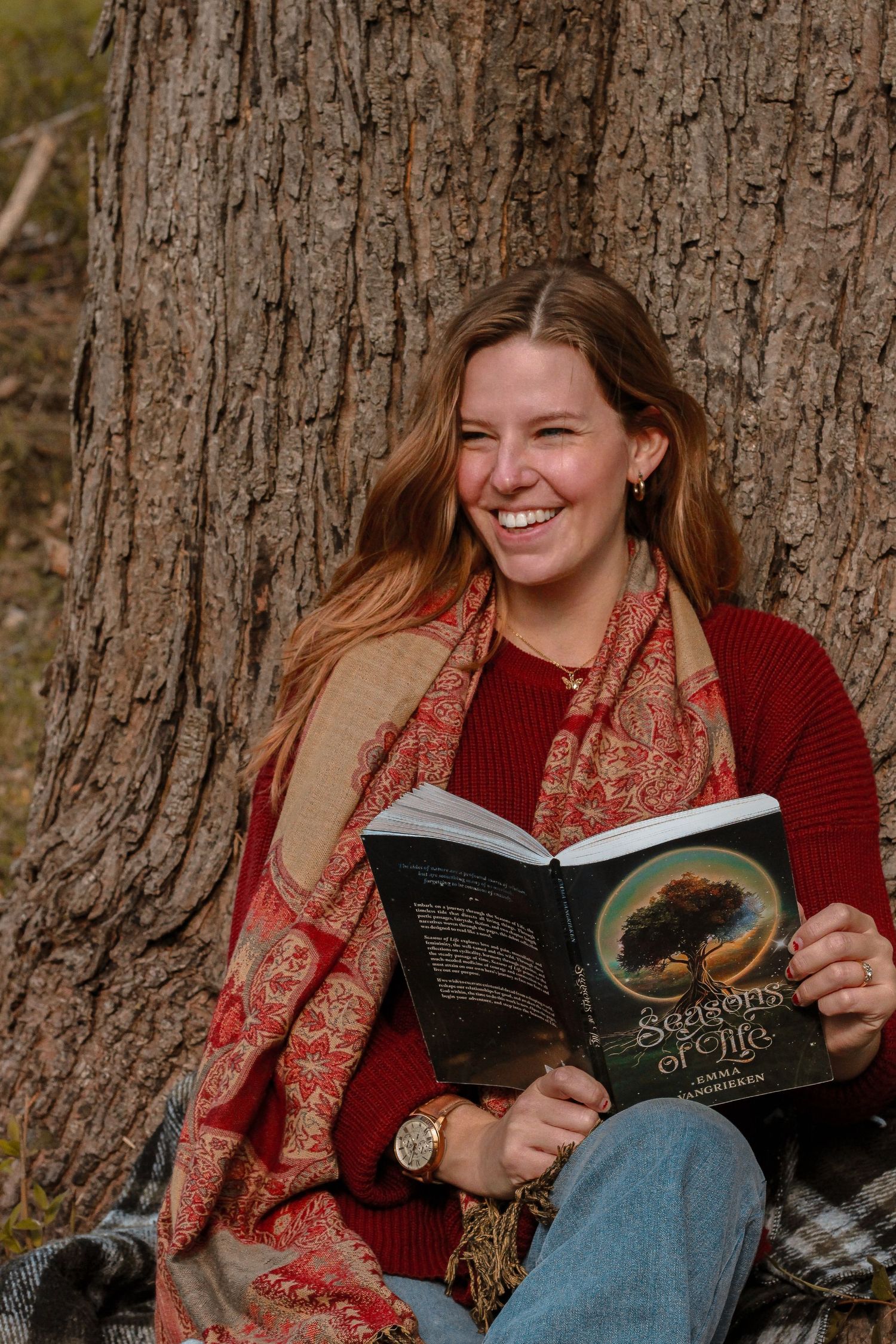
In a world where stories shape our perspectives and ignite our imaginations, the journey of a published writer is both inspiring and transformative. From the initial spark of creativity to the challenging road of editing and submission, the path to seeing one's words in print is laden with dedication, resilience, and passion. In this blog entry, we delve into the life of a remarkable author, Emma V., whose unique voice and compelling narratives have captivated readers locally. Join us as we explore their writing process, the challenges they’ve faced, and the insights they’ve gained along the way, highlighting how their literary contributions continue to resonate in an ever-evolving literary landscape.
Here are a few of her answers from the interview:
1. Can you please describe a brief background about yourself as a writer?
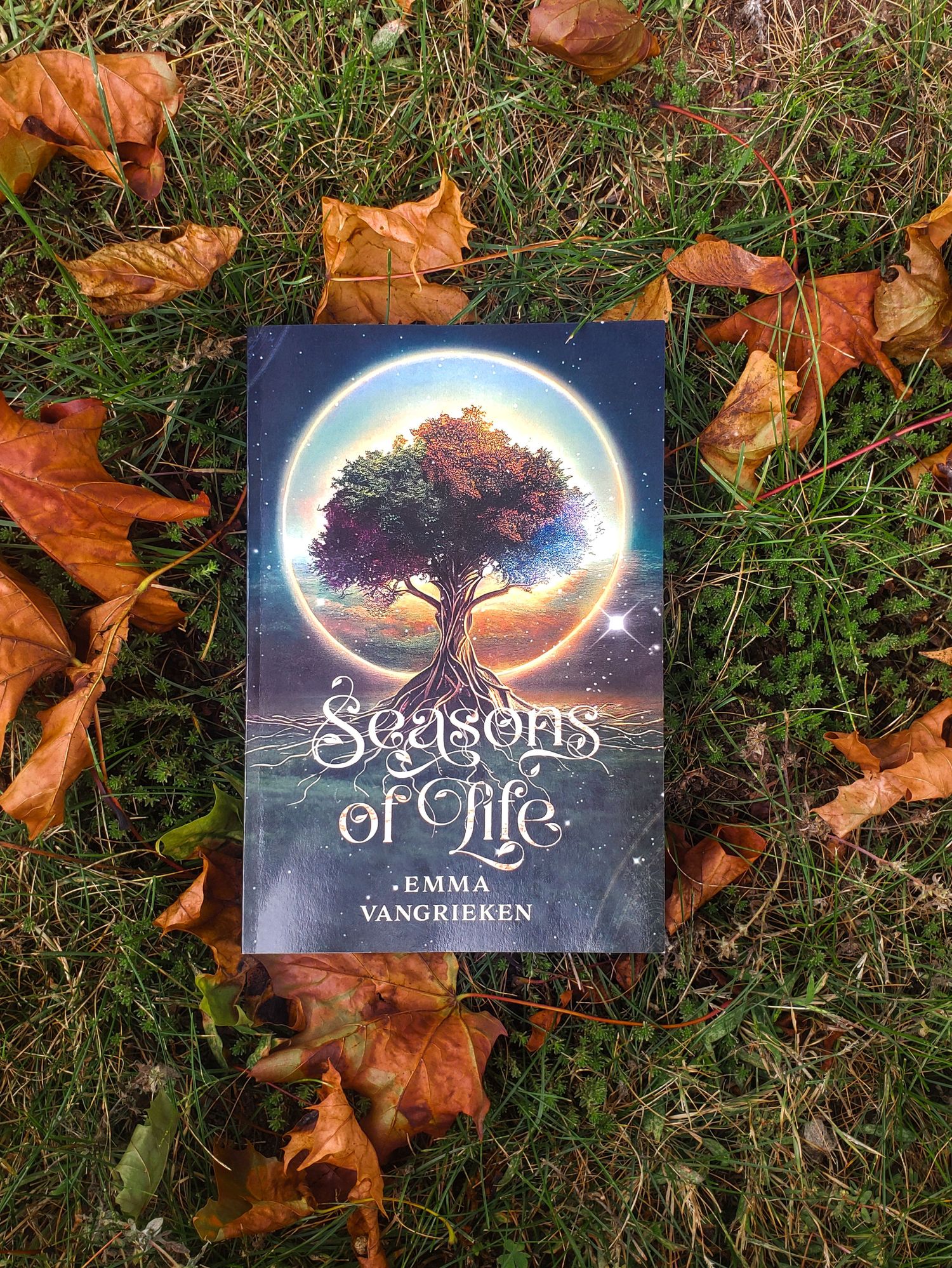
Absolutely! I think the first thing I ever wrote that made me want to be a writer was a graphic story assignment in 6th grade. I've actually always loved the idea of combining visuals with the written word, which is why my debut book 𝘚𝘦𝘢𝘴𝘰𝘯𝘴 𝘰𝘧 𝘓𝘪𝘧𝘦 is poetry and fiction combined with photography into a scrapbook-style story.
Honestly I can't remember a time I didn't love to tell stories.
2. Can you please list an overview of your work and achievements?
𝘚𝘦𝘢𝘴𝘰𝘯𝘴 𝘰𝘧 𝘓𝘪𝘧𝘦 is my debut book, which I self-published in 2024. It's a book of poems, fiction, and photography that use the cycle of nature to illustrate the nature of change and how we can embrace it courageously.
And then I made a spoken-word album based on the book called 𝘋𝘢𝘳𝘬𝘯𝘦𝘴𝘴 𝘵𝘰 𝘓𝘪𝘨𝘩𝘵, which focuses specifically on the book's themes of loss, faith, and redemption. I'd definitely recommend giving it a listen!
3. What inspired you to become a writer?
Haha, that's a funny question. Nothing really inspired me, I've just always done it.
I guess I could say that reading inspired me to write because I've always loved books, but that wouldn't quite be right. There was never a moment I engaged with a book and thought, "Wow, THIS makes me want to be a writer!" I just always HAVE been a writer. It's never something I aspired to turn myself into.
4. Did you have early influences or mentors in writing?
My Grandma told me bedtime stories she'd make up on the spot, and my Dad would read me these kid's chapter books called Junie B. Jones. My Mum would also read picture books to us with ALL the voices, and I loved that. I also grew up watching a lot of movies.
So really, I think my early mentors have always been the stories I was seeing around me. Some were better than others and I always want to understand WHY they were and WHAT they did to be good.
I also did have a Grade 12 English teacher who pushed me past what I knew I could do and really challenged me to try harder, but that's a longer and very fun story to tell that I'll save for another time ;)
5. Are there specific subjects or topics you gravitate toward? Why?
I gravitate towards change because it's the fundamental truth of life. Whether I'm writing poetry or fiction, there's always something that has to CHANGE for a piece to be good. Something has to happen.
In a fantasy story for example, because I'm working on a novel right now, you as the author have to shoe that the world around the character is changing, the character themselves is changing, and they have the ability in some way to influence people around them to change. Or you can use the LACK of change to convey the message, but change is the essential element of storytelling. People will tell you that conflict is the central element, but conflict IS change. The character has to have something to face.
And then in poetry as another example, because I also write poetry, again, something has to change. I really can't stand modern poems where nothing HAPPENS. There's a lot of work out there calling itself poetry that's really just an observation without any depth or metaphor or reverence to it. A lot of modern poems are just run-on sentences that take themselves too seriously. But if you have the element of change somewhere in there, you can show a lot, rather than just telling your readers how they're supposed to feel with endless flowery, illustrative language.
6. What are some of the biggest challenges you face as a writer?
Wanting to write all the time. I really don't believe in writer's block or perfectionism or imposter syndrome, which is probably what you were expecting to read here. Those things are defense mechanisms. They're defense mechanisms because they either help you to procrastinate writing because it's hard or because it's vulnerable.
There is no such thing as writer's block. Writer's block is a lack of being inspired by your everyday life and a pack giving yourself space yo have original thoughts. It stems from overconsumption and time-management issues where, when you sit down, your brain is too full of non-sense from other people or frustrations from not having a way to emotionally regulate yourself and burn off steam. When you try to wrote from that place, of course you won't feel this magical "spark" that everybody is waiting for.
It's also all coming from not having a vision. I don't struggle with imposter syndrome or perfectionism because I know I want to write something unlike anything else, so of course it's going to stand out and be recognized. That's what you WANT to do as a creator. The other side of that coin is that if you're committed to your craft, A) you study it enough to know that you're good because of hoe much focus and practice you pour into it, and B) you accept that it isn't ever going to be perfect and your work NOW is going to look a whole lot different than your work when you're fifty.
I already look back at my poetry book and blush a little because there are things I'd do differently. But it's unlike anything I've seen before and my goal wasn't to have a PERFECT book, it was to have a PUBLISHED book with the real problems like plot holes, bad writing and typos worked out of it (for the most part, honestly there's still a typo here and there!)
So yes, my biggest struggle writing is the fact that I can't always be sitting down to write. I've done a good job of teaching myself that I don't always NEED to be writing, so I don't get that anxiety anymore when I'm not creating that feels like I'm losing precious time NOT doing it. But ideas are always floating in my head and when I sit down it all pours out, which I love. So, because I love writing so much, I do wish I could do it for hours on end everyday. 4-5 hours a day is the long-term goal! Anything more isn't sustainable, but that chunk is such a nice amount of time to really dive deep and grapple with the story!
7. What tools do you currently use for writing, and why?
I use Google Docs for writing, Chat GPT for research, and Pinterest for worldbuilding ideas.
I'm a visual person, so having a world-building board on Pinterest helps me to get those pictures out of my head and in front of my face so I can go there to immerse myself in the visuals of the world and really dive in.
Chat GPT is so convenient for looking things up without pouring over endless pages. You can lose a lot of time scouring the internet for one specific thing, and it's so easy to get distracted there too. And I really don't like wasting time. So I use Chat GPT to teach me things I don't already know myself, like, would a Prince have a squire in this scene or, what are some sword fighting terms I can use, or what kind of herbs grow in northern mountain valleys where the climate is between 22 and -2 degrees Celsius all year round? Chat GPT is great for stuff like that, and I never want to get stuck on one small thing when drafting, so it's great to get the idea down and then I can do a historical fact check later on when I'm editing.
For poetry, Chat GPT is also great as a thesaurus.
I'm going to clarify that I never ask Chat GPT to write for me. I've actually asked my bot to never offer suggestions as paragraphs or descriptions, but just to gibe me the research. I think AI is an amazing tool for information, but I never want to outsource my creative intelligence to it in the writing process.
Ans then Google Docs I use because it's a fine place to write my drafts and poems. You really don't need anything else other than a basic word, document, typing space to do the actual writing, although most of my poems start on paper and I'll transcribe them later. I find that poetry for me is more connected to the physical act of writing because it's more personal and emotional.
8. Have you published your work? If so, what was that experience like?
Yes, I published the spoken-word album 𝘋𝘢𝘳𝘬𝘯𝘦𝘴𝘴 𝘵𝘰 𝘓𝘪𝘨𝘩𝘵 in February 2024 and I self-published 𝘚𝘦𝘢𝘴𝘰𝘯𝘴 𝘰𝘧 𝘓𝘪𝘧𝘦 in October of 2024. The process for both was long and took a lot of commitment. There were plenty of decisions involved and I had to be decisive about those decisions, but in the end the process was actually really neat to go through and very rewarding.
For the spoken-word album, I actually had to teach myself how to sound mix by laying a musical track down and lining it up well with the emotional cadence of the voice over. I had to practice a vocal performance for that, speaking really clearly and acting out the poem theatrically and with gusto instead of just reciting it. And then I found a platform to upload to, host the album and distribute it. I did similar things for my book, but I hired a designer and mentor for that.
The process for both required that I be willing to teach myself new skills, but that was honestly one of the best part of the process.
My next challenge will be to go through traditional publishing and agenting with my fantasy book, and I might also do that with my next poetry book. That's a whole other beast than self-publishing!
9. What advice would you give to aspiring writers looking to make a career out of it?
I really can't say what advice I'd give you if you're looking to make a career out of writing because I'm not a career writer and I don't pretend to be.
I'm currently a stay at home mom with my first baby, and I'll be doing that for the foreseeable future. I can imagine that I'd like to take on more once my kids are older though, and I've pictured myself going back to school for an MFA since before I even graduated my BA. Ultimately, I'd love to end up teaching writing and never stop writing myself. But as far as making writing a career, that really depends on your goals.
I've worked in copywriting before, but that's very different from creative writing in the sense that it's marketing-based and that's an extraordinarily different kind of storytelling than fiction or poetry. If that's the way you want to go, you're going to want to learn data analytics, SEO, and how to use marketing tools to understand a campaign's impact on an audience. To me, that's not writing anymore. That's marketing, but you do get to write copy for websites, blogs, packaging, and promotions so if that's your jam then be my guest.
That said, I don't think anybody accidentally makes a career out of creative writing, but I don't think there's really a method to doing it on purpose, haha.
Obviously you should read and write as much as you can. Study great works and authors you admire. Study books you don't admire too to see what they've done well. Study books that've been banned to see what nerve they hit and how they did it. Study history and philosophy to enrich your lore. Study psychology to give your characters depth. Study literature as a whole and see what people have tried to use it to say over the years. Art history is a good tool for that as well.
But honestly, outside of just studying writing and actually writing, there's not much more you can do besides put yourself out there, submit, and hope for the best!
I think all in an important distinction to make is that doing writing as a career requires a lot of persistence and a long timeline, but BEING a writer just requires that you write, and you can do that any time, for any amount of time, and really, that's what matters. You really just HAVE to write and find a home for it to be seen.
10. Can you share a quote or mantra that inspires you in your work?
Do it, and don't make excuses, haha. That's not very romantic of me to say, but that's really all there is to it.
PHOTOS & LINKS:
Photos taken by: Emma Vangrieken
Instagram: @emmavangrieken
Album:
